
Newsletter Subscribe
Enter your email address below and subscribe to our newsletter

 ByJohn A
Backyard improvement projects can create more waste than homeowners expect. Removing an old patio, replacing fencing, clearing brush, rebuilding a deck, installing new landscaping, or removing a shed may produce wood, soil, concrete, vegetation, packaging, and other debris.
Handling those materials efficiently is an important part of the project. A simple waste plan can help homeowners keep the yard usable, reduce repeated handling, and prevent debris from taking over driveways, walkways, and other areas needed for everyday household use.
Before work begins, consider what materials the project is likely to generate.
A deck removal may produce lumber, screws, railings, and concrete footings. Landscaping work can create branches, sod, soil, roots, edging, and old mulch. Patio projects may add pavers, gravel, sand, or broken concrete.
Knowing the expected materials makes it easier to decide what can be reused, recycled, composted, or removed as general project waste.
See also: Artificial Intelligence in Public Safety
Debris should have a specific location rather than being scattered throughout the yard.
Select an area that is reasonably close to the work but does not block gates, sidewalks, driveways, or access to the house. It should also remain clear of septic components, drainage areas, irrigation equipment, and landscaping that will stay in place.
A defined staging area keeps the rest of the property more organized and simplifies final removal.
Backyard projects often uncover materials that still have value. Intact pavers, decorative stone, landscape timbers, fencing components, or usable lumber may work elsewhere on the property.
Keep these items separate from debris from the beginning.
Once reusable materials become buried under soil, branches, nails, or broken masonry, recovering them becomes more difficult. A separate keep pile also makes it easier to see what actually needs to leave the property.
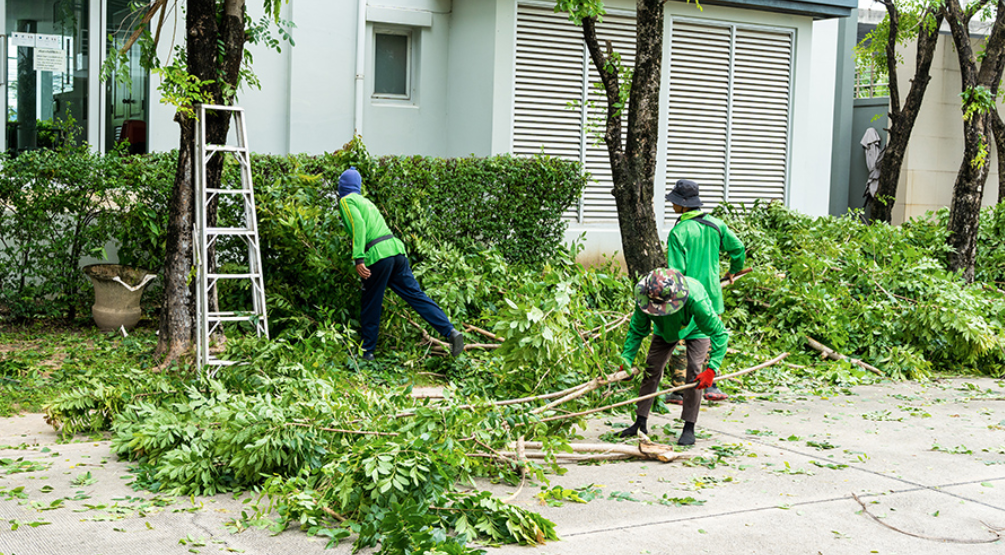
Branches, leaves, grass, shrubs, and other organic materials may have different disposal options from construction debris.
Some communities accept yard waste separately, while suitable vegetation may be chipped or composted. Homeowners should keep plant debris away from metal, plastic, concrete, and treated wood if they want to preserve those options.
Cutting long branches into smaller sections can also reduce the amount of space brush occupies during cleanup.
Concrete, soil, gravel, brick, and stone can become extremely heavy even when the pile looks relatively small.
Homeowners should avoid estimating waste needs based on volume alone. A container or trailer may still have visible space while already holding a substantial amount of weight.
Keeping dense materials separate from lighter debris makes loading easier to monitor and may allow different removal methods to be used where appropriate.
Old outdoor furniture, fencing panels, sheds, deck boards, play equipment, and other large objects can quickly consume valuable working space.
If these items are definitely being discarded, removing or breaking them down early can make the rest of the project easier.
Bulky materials left in the middle of the work area often have to be moved repeatedly as landscaping, excavation, or installation work progresses.
Backyard projects depend on clear movement between the work area and the street, driveway, or staging location.
Do not allow debris piles to block gates or the paths used by wheelbarrows, carts, contractors, or equipment. Keeping at least one reliable route open reduces extra handling and makes it easier to bring new materials into the yard.
Homeowners should also protect finished areas from becoming temporary debris routes as the project advances.
Outdoor projects often grow after work begins. Removing a few damaged deck boards may reveal structural problems, or a landscaping refresh may lead to additional shrub removal and edging replacement.
Temporary Dumpster may be considered alongside local transfer stations, recycling facilities, municipal programs, and other removal options when a backyard project generates more debris than routine collection can reasonably handle.
Leaving some flexibility in the cleanup plan helps homeowners respond when the scope expands.
Waste does not stop once demolition is finished. New patio materials, outdoor furniture, fencing, lighting, grills, planters, and landscaping products can generate cardboard, plastic wrap, foam, and straps.
Contain packaging as products are opened rather than allowing it to accumulate around the yard.
Lightweight plastic and cardboard should be secured promptly because wind can carry these materials into neighboring properties or streets.
Families may continue using portions of the yard while improvement work is underway. Debris areas should remain separate from play spaces and common pet routes.
Sharp materials such as nails, screws, broken wood, metal edging, and masonry fragments should be contained immediately.
Before children or pets return to the area, inspect lawns, patios, and walkways for small debris that may have escaped the main work zone.
Large backyard projects are easier to manage when cleanup happens throughout the work instead of only at the end.
After demolition, clear major debris before installation begins. At the end of each workday, consolidate loose materials, secure lightweight waste, and reopen any household routes that can safely be used.
These checkpoints prevent yesterday’s debris from becoming tomorrow’s obstacle.
Once the major waste is gone, inspect the entire work area and the routes used for removal.
Look for screws, nails, wire, plastic, wood fragments, stones, and packaging in grass, planting beds, driveways, and staging areas. Raking or sweeping may also be needed where debris piles were located.
A careful final cleanup helps the completed backyard improvement look finished rather than simply constructed.
Backyard improvement projects are easier to manage when waste handling is planned from the beginning. Defined staging areas, material separation, open access routes, and regular cleanup can prevent debris from spreading across the property.
By removing bulky materials early and adjusting the plan as the project grows, homeowners can protect usable space and avoid repeatedly moving the same waste. The result is a smoother transition from demolition and cleanup to a finished backyard that is ready to enjoy.
