Newsletter Subscribe
Enter your email address below and subscribe to our newsletter

 ByJohn A
Anyone who has ever bought a gemstone online only to be surprised by its color in person knows the frustration well. A gomed stone photographed under bright studio lights can look strikingly different once it’s slipped onto a finger and viewed in the soft glow of a living room lamp, or worse, under the flat fluorescent light of an office.
This isn’t a flaw in the stone itself; it’s simply the nature of how light interacts with gemstones, and understanding it can save buyers from disappointment, confusion, and unnecessary second-guessing. The same stone may appear warmer, deeper, or slightly muted depending on the surrounding light.
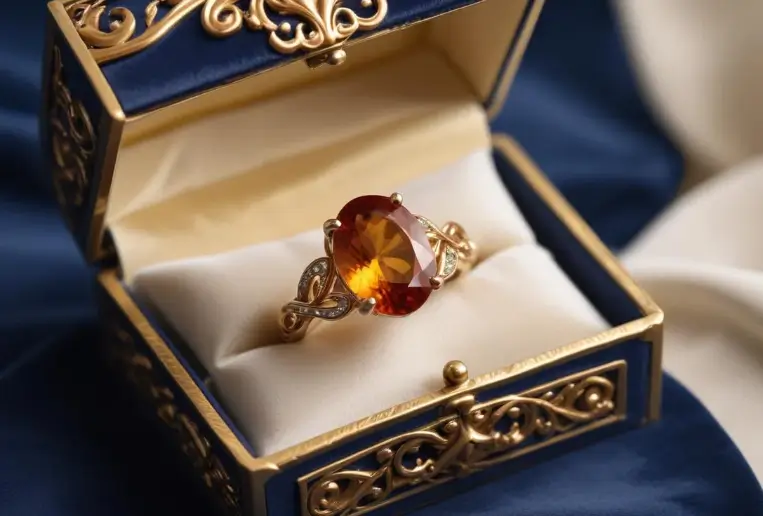
The appearance of a gemstone is not fixed under every light source. Its colour, transparency, and internal features can become more or less noticeable depending on the type and direction of light falling on it. This is especially relevant when examining gemstones, as hessonite garnet can display different levels of warmth and depth in changing surroundings.
For anyone comparing gomed stone in Bangalore, viewing the same gemstone under daylight and more than one indoor light source can provide a more balanced impression than relying on a single showroom light or photograph.
Lighting doesn’t act alone, though. The way a stone is cut plays an enormous role in how it captures and disperses light. A well-faceted gemstone reflects light evenly across its surface, creating a lively, almost glowing appearance. A poorly cut or overly included stone, on the other hand, may trap light unevenly, resulting in dark patches or a flat, lifeless look regardless of how good the lighting is. This is one of the reasons buyers are often advised to inspect a stone under at least three conditions: natural daylight, warm indoor lighting, and cooler artificial light, since each reveals a different layer of the stone’s true character.
Clarity matters just as much. Stones with fewer internal inclusions allow light to pass through more freely, producing that sought-after inner glow associated with high-quality hessonite. Heavily included stones tend to scatter light unpredictably, which is often mistaken for a lighting issue when it’s actually a clarity concern.
Those wearing a gomed stone as part of their daily routine will notice it behaves almost like a small mood ring in terms of visual variation, not because its properties change, but because the eye interprets color differently depending on contrast and brightness. Under warm incandescent bulbs, common in many Indian homes, the stone typically appears richer and more saturated, its cinnamon tones deepening beautifully. Step outside into midday sun, and the same stone often reveals brighter, more golden facets, with light dancing across its surface far more visibly than indoors.
Office lighting tends to be the trickiest environment. Cool-toned LED panels can wash out warmer gemstones, making them appear duller or slightly grayish compared to how they look at home. This is a completely normal optical effect and not a sign of a lower-quality stone, though it does mean buyers should avoid judging a purchase solely based on how it looks under a single lighting setup.
See also: How Wholesale Apparel Helps Businesses Reduce Printing Costs
For anyone shopping for hessonite, a few simple habits make a real difference. Viewing the stone near a window during daylight hours offers the most accurate representation of its natural color. Comparing it under both warm and cool artificial light afterward helps set realistic expectations for how it will look throughout a typical day.
It’s also worth holding the stone at slightly different angles, since gomed’s brilliance often reveals itself through subtle movement rather than static viewing. Buyers relying on online photographs should remember that professional lighting setups are designed to flatter a stone, so seeing it described accurately, including clarity grade and cut details, matters just as much as the image itself.
Lighting doesn’t change what a gemstone is; it simply changes how clearly its true qualities come through at any given moment. A little patience, viewing a stone across a few different environments, goes a long way toward understanding its real character rather than judging it on a single glance. For those in South India exploring options for gomed stone in Bangalore, taking the time to view a piece in natural daylight before finalizing a purchase remains the single most reliable way to judge its authentic color, clarity, and brilliance, ensuring the stone chosen is one that will look just as striking at home as it did in the store, no matter the hour or the light overhead.
RudraTree, a century-old name rooted in Bangalore’s spiritual and gemstone trade, sources its hessonite directly from established gem regions, pairing each piece with lab certification so buyers can evaluate clarity and cut with confidence, rather than relying on lighting alone to judge a stone’s genuine quality and character.