Newsletter Subscribe
Enter your email address below and subscribe to our newsletter

 ByJohn A
Community ponds get judged every day by the people who pass by them. Residents notice when the water turns green in July or starts to smell near the mailboxes, and the complaints usually reach the board before anyone checks the water quality. A well-chosen fountain changes that picture, and the choice deserves more planning than a quick catalog order.
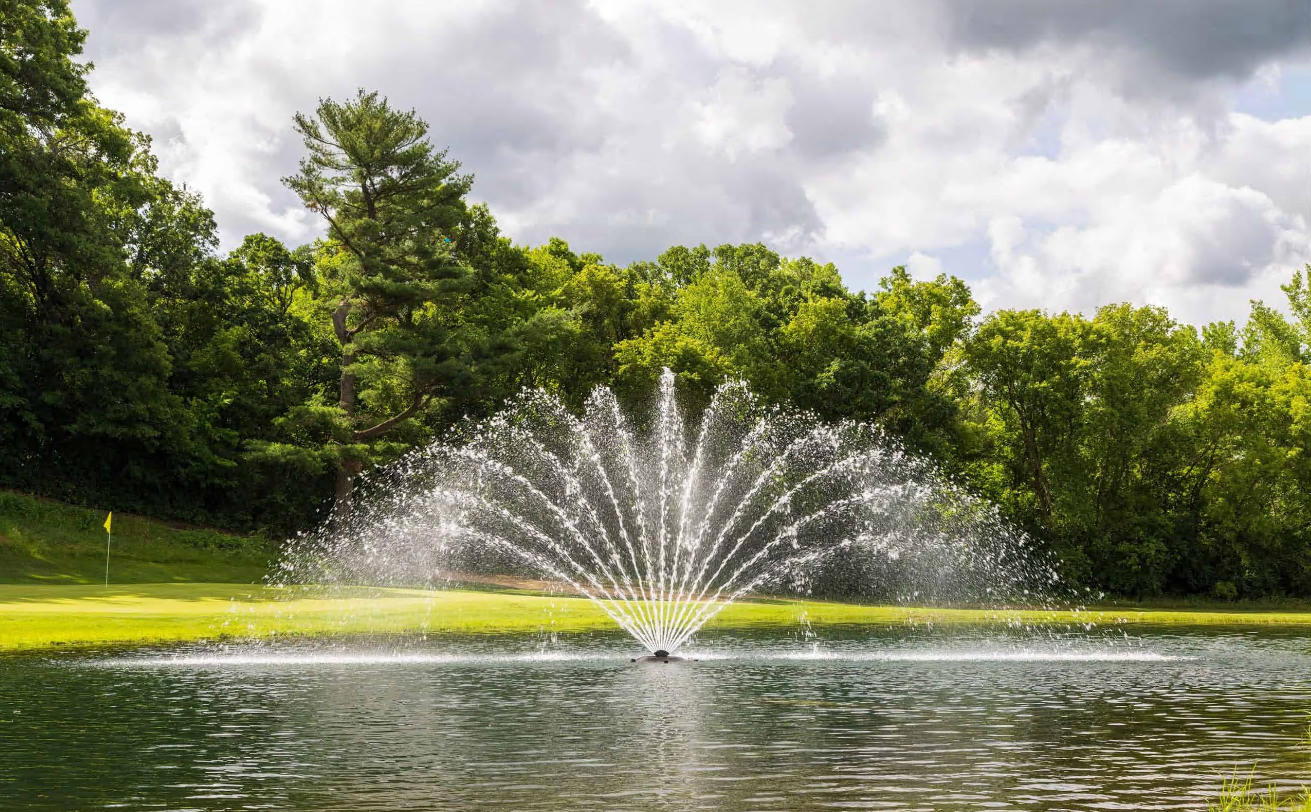
A fountain pond gives an HOA or property manager moving, oxygen-rich water that stays clearer through the summer months, plus a centerpiece people see at the entrance or clubhouse. The spray breaks the surface and pulls oxygen into the upper layer of water. Residents see a property that looks cared for, and the board hears less about algae and odor.
Many HOA ponds were built to catch rain from streets, roofs, and lawns. That water carries grass clippings, soil, and lawn fertilizer into the pond. Nitrogen and phosphorus from fertilizer feed algae, and still water gives that algae time to spread across the surface. By midsummer, a pond that looked fine in April can look neglected, even with a careful grounds crew.
Most of these ponds work as a stormwater retention pond, which means they hold runoff and let sediment settle before water moves on. A fountain fills that role and keeps the surface moving between storms. Some cities and counties set rules for work on these ponds, so a quick call to the local stormwater office before installation can prevent delays.
See also: How Lighting Can Change the Way Gomed Stone Looks in Real Life
Wind carries fine spray farther than most people expect. On a breezy afternoon, a tall display can wet a walking path, parked cars, or a planted riparian buffer along the bank. That strip of native grasses and shrubs filters runoff and holds the soil in place, so the spray should land on open water. A lower, wider pattern often suits ponds close to homes.
Falling water makes a steady sound. Some residents find it relaxing, while others find it hard to sleep near. Perhaps the simplest fix is a timer that lowers or pauses the display late at night on ponds that sit close to houses. In summer, the pond still needs moving water in the hours before dawn, and that’s easy to overlook.
Most listings lead with horsepower, and that number can mislead buyers. A fountain sold as 1 HP may run on a motor with closer to 1/3 HP of output. Net flow rate tells the board how many gallons per minute the fountain lifts into the air. That volume sets the display size and how much water gets aerated, so compare it before price.
Algae and pond plants add oxygen during the day and use it up at night. In hot weather, oxygen often reaches its lowest point just before sunrise, and that is when fish kills tend to happen. A board that runs the fountain on a timer to save power should keep it on overnight in the warmest months. Residents will still expect to see it running by day.
A surface fountain moves the upper few feet of water well. Ponds deeper than about eight feet, or long and narrow ponds, may need two fountains or a bottom aeration system to reach the far ends and the lower layers. On a large retention pond, two smaller units spaced apart often circulate more of the water than one oversized display in the middle.
Residents rarely comment on a pond that looks right, and they almost always comment on one that looks wrong. A fountain sized by net flow rate and set to run through summer nights keeps the water clearer and reduces complaints. Request a sizing review for your community pond before the next warm season, and compare fountain options with published flow figures.